
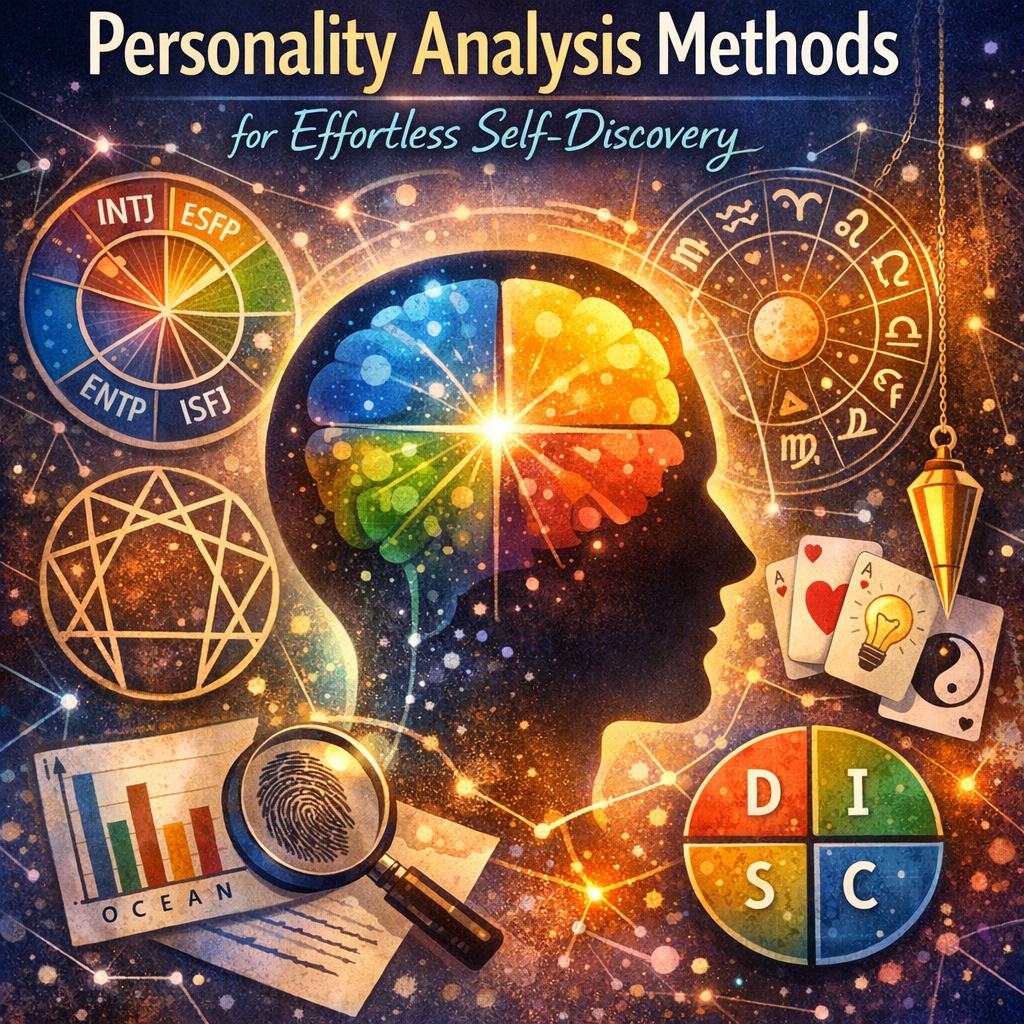
Stunning Personality Analysis Methods for Effortless Self-Discovery
- Exploring Traditional Approaches
- The Enneagram: A Deep Dive into Motivations
- The Power of Online Assessments
- Utilizing Journaling for Self-Reflection
- The Role of Feedback in Growth
- Building Emotional Intelligence through Personality Insights
- Conclusion: A Pathway to Self-Discovery
Stunning Personality Analysis Methods for Effortless Self-Discovery
Personality analysis methods have become increasingly popular as people seek insights into their identities and behaviors. Understanding one’s personality is crucial for personal development, enhancing relationships, and even excelling in careers. With a variety of techniques available, discovering your unique traits has never been easier or more enjoyable.
Exploring Traditional Approaches
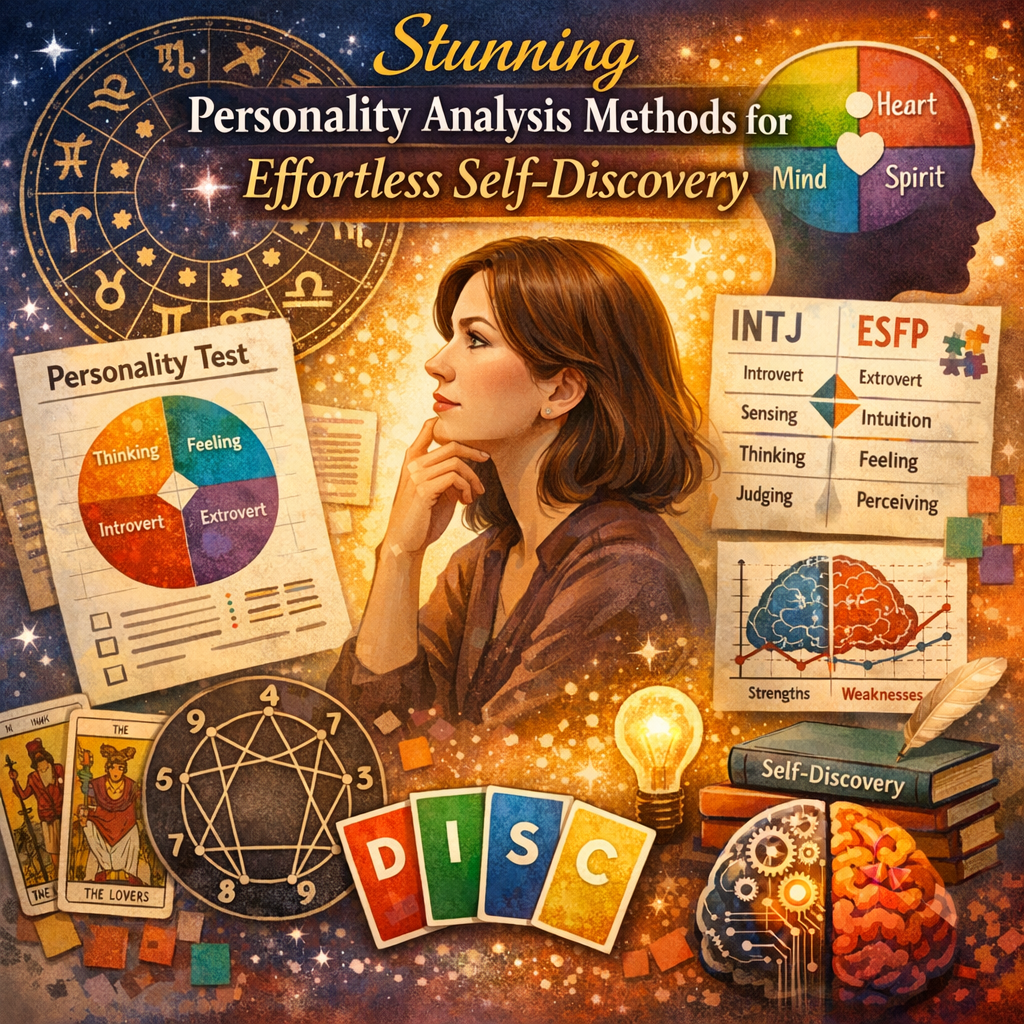
While modern technology has offered new avenues for self-discovery, traditional personality analysis methods remain relevant and powerful. The most well-known among these is the Myers-Briggs Type Indicator (MBTI). This method categorizes individuals into 16 different personality types based on four dichotomies: Introversion vs. Extraversion, Sensing vs. Intuition, Thinking vs. Feeling, and Judging vs. Perceiving.
The MBTI framework is beneficial for understanding how you interact with the world and how you prefer to process information. For instance, an Introverted Thinking (Ti) type may thrive in solitary or small group settings, excelling in tasks that require deep focus and analytical skills. This awareness can guide you in choosing career paths or social strategies that align with your innate preferences.
The Enneagram: A Deep Dive into Motivations
Another intriguing personality analysis method is the Enneagram, which identifies nine distinct personality types, each driven by specific motivations and fears. Understandably, this approach goes beyond the surface traits to explore the deeper emotional drivers behind behaviors.
Using the Enneagram in self-exploration can be particularly eye-opening. For example, a Type 3, often known as “The Achiever,” may be driven by a need for success and validation, which could impact personal relationships. By acknowledging these motivations, individuals can work toward healthier relationships and personal fulfillment.
The Power of Online Assessments
In today’s digital age, numerous online assessments provide quick and engaging insights into your personality. Websites like 16Personalities or Truity offer free assessments based on well-established theories. These tests not only provide immediate results but also break down your personality type with descriptive profiles.
As effective personality analysis methods, these online tools cater to those seeking a more accessible way to dive into self-discovery. They often include advice on how to leverage your personality traits in various aspects of life—be it in romance, work, or social settings.
Utilizing Journaling for Self-Reflection
While many appreciate structured methods, the practice of journaling offers a unique and personal approach to personality analysis. This reflective method provides a space to articulate thoughts and emotions, helping individuals uncover patterns in their behaviors and attitudes over time.
To begin, consider setting aside time each day to write about your experiences, feelings, and interactions. Ask yourself probing questions: What situations made you feel energized? When did you feel drained? By tracking your daily emotional responses, you’ll gain a deeper understanding of your personality dynamics.
The Role of Feedback in Growth
Feedback from trusted friends or mentors can also serve as an enlightening personality analysis method. Often, others can see aspects of our personalities that we may overlook. Seeking constructive criticism helps in identifying blind spots and understanding how your personality affects those around you.
For instance, a colleague might highlight your leadership skills, indicating a preference for taking charge. Conversely, someone might point out potential areas for improvement, such as being overly critical or reserved in discussions. This external perspective can be invaluable for personal growth and self-awareness.
Building Emotional Intelligence through Personality Insights
One of the most significant benefits of utilizing personality analysis methods is their contribution to emotional intelligence (EI). Developing EI not only improves self-awareness but also enhances your ability to empathize with others. Understanding how different personality types interact can facilitate better communication and more profound connections.
For instance, if you identify as an Empath, being aware of your sensitivity may help you navigate social situations more effectively, allowing you to set boundaries and manage relationships positively.
Conclusion: A Pathway to Self-Discovery
Exploring various personality analysis methods can immensely benefit your journey toward self-discovery. Whether you opt for traditional assessments, online quizzes, or reflective practices, each method offers unique insights that contribute to personal growth.
As you navigate these methods, remember that self-discovery is a lifelong journey. Embrace the process with curiosity and an open mind, and you’ll find that understanding your personality can lead to more fulfilling relationships, a richer professional life, and a deeper connection with your authentic self.