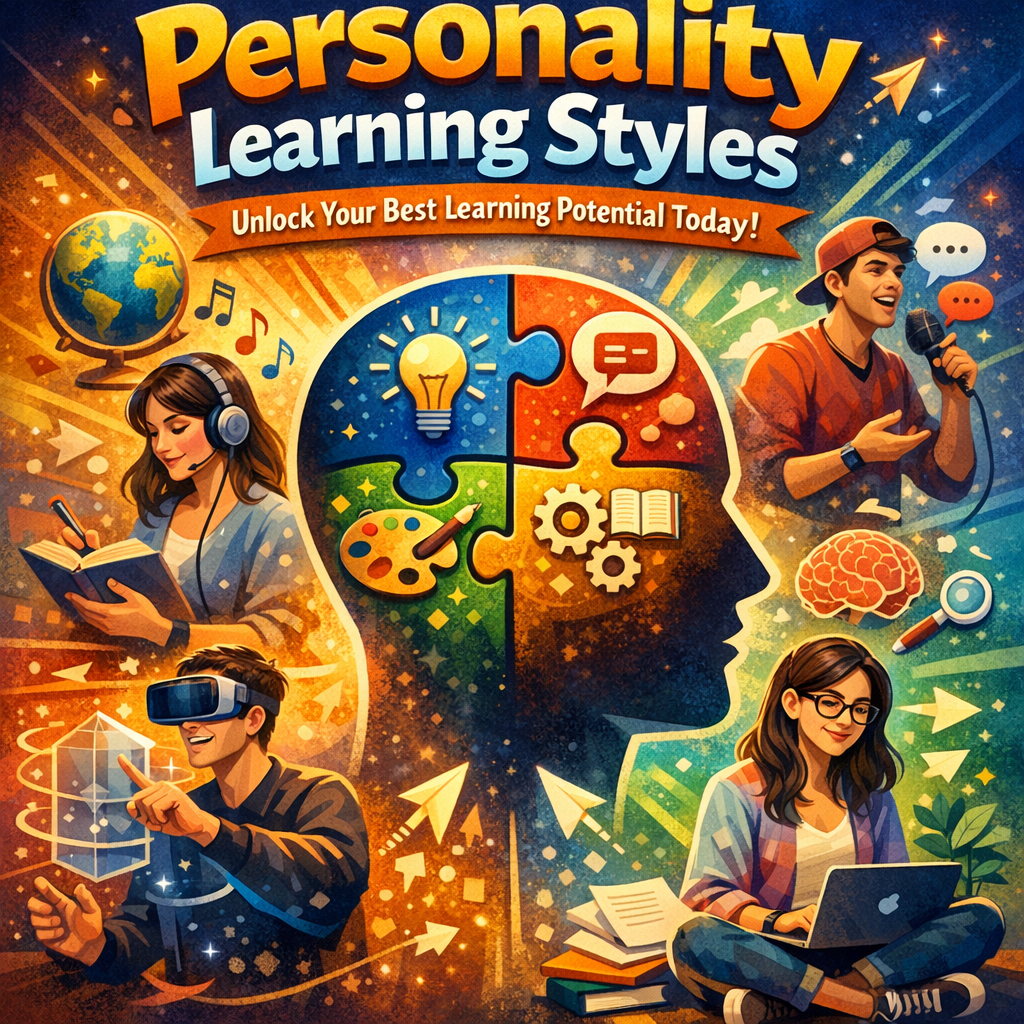
Personality Learning Styles: Unlock Your Best Learning Potential Today!
- Personality Learning Styles: Unlock Your Best Learning Potential Today!
- Understanding Personality Learning Styles
- Identifying Your Personality Learning Style
- Tailoring Your Learning Approach
- 1. Visual Learners
- 2. Auditory Learners
- 3. Kinesthetic Learners
- 4. Reading/Writing Learners
- Applying Personality Learning Styles to Achieve Goals
- 1. Set Specific Goals
- 2. Seek Feedback
- 3. Reflect and Adjust
- Conclusion
Personality Learning Styles: Unlock Your Best Learning Potential Today!
Personality learning styles play a crucial role in how individuals absorb and process information. Recognizing and understanding these styles can enhance your educational experience, improve retention, and make learning more enjoyable. By tapping into your unique personality traits, you can tailor your study methods to optimize your learning potential.
Understanding Personality Learning Styles
The concept of personality learning styles is rooted in the idea that people have distinct preferences for how they learn. These preferences can be influenced by various factors, including psychological traits, social environments, and even cultural contexts. Common frameworks for understanding personality learning styles include the Myers-Briggs Type Indicator (MBTI), Kolb’s Experiential Learning Theory, and Gardner’s Multiple Intelligences.
1. Myers-Briggs Type Indicator (MBTI): This assessment categorizes individuals into 16 personality types based on four dichotomies: Introversion vs. Extraversion, Sensing vs. Intuition, Thinking vs. Feeling, and Judging vs. Perceiving. Each of these dimensions influences how a person interacts with information and engages in the learning process.
2. Kolb’s Experiential Learning Theory: Kolb’s model identifies four stages of learning: Concrete Experience, Reflective Observation, Abstract Conceptualization, and Active Experimentation. Understanding where you fit into this cycle can help you align your learning activities with your natural tendencies.
3. Gardner’s Multiple Intelligences: According to Howard Gardner, intelligence is not a single entity but a combination of different modalities, such as linguistic, logical-mathematical, musical, and interpersonal. By identifying your dominant intelligences, you can tailor your approaches to learning that resonate most with you.
Identifying Your Personality Learning Style
To effectively leverage personality learning styles, it’s essential to identify your own. Start by asking yourself these questions:
– What do I enjoy doing the most? Reflect on activities that captivate your interest—are they more analytical, creative, or hands-on?
– How do I typically study or learn new concepts? Consider whether you prefer reading, listening, watching videos, or engaging in discussions.
– Do I thrive in collaborative environments, or do I prefer working individually? This will potentially indicate whether you lean toward interpersonal or intrapersonal intelligences.
Tailoring Your Learning Approach
Once you’ve identified your personality learning style, it’s time to tailor your learning strategies accordingly. Here are some practical tips based on different styles:
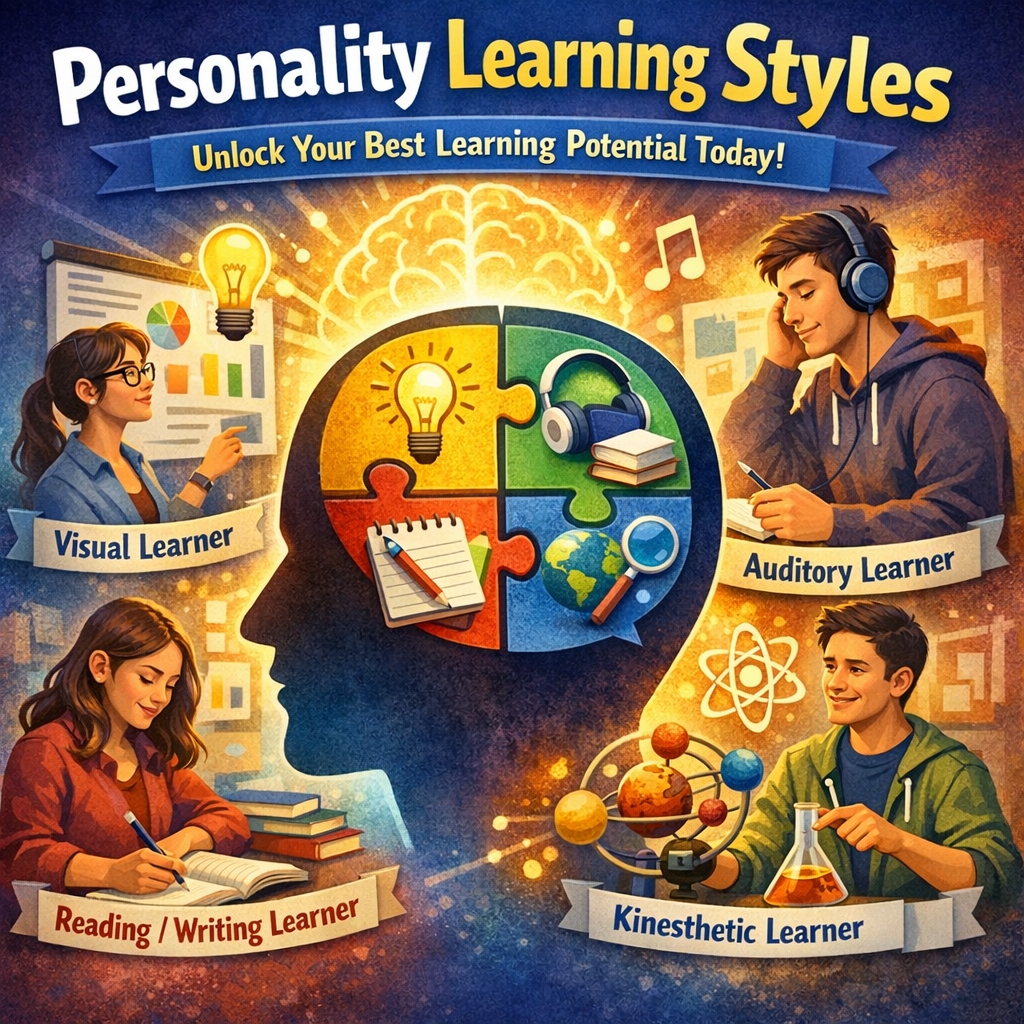
1. Visual Learners
These learners benefit from diagrams, charts, and videos. If you identify as a visual learner, consider using mind maps or infographics to connect ideas. Utilize color coding to organize notes, which can enhance understanding and recall.
2. Auditory Learners
If you flourish in verbal discussions and auditory stimuli, try joining study groups or engaging in discussions about the material. Listening to podcasts or audiobooks related to your subjects can also reinforce learning.
3. Kinesthetic Learners
For those who learn best through physical activities, incorporate hands-on experiences into your studies. Use models or create simulations to grasp complex concepts. Role-playing or conducting experiments can also provide a deeper understanding.
4. Reading/Writing Learners
If you gain understanding primarily through reading, immerse yourself in textbooks, articles, and research papers. Take thorough notes, summarize information, and write down your thoughts to reinforce learning.
Applying Personality Learning Styles to Achieve Goals
Understanding your personality learning style can significantly enhance your ability to achieve academic or personal goals. By employing tailored strategies, you can not only make learning more effective but also increase your motivation and engagement.
1. Set Specific Goals
Establish clear, achievable objectives based on your learning preferences. For example, an auditory learner might set a goal to summarize key points from a lecture in a podcast format.
2. Seek Feedback
Utilize peer feedback to refine your understanding. This is particularly beneficial for interpersonal learners, who thrive on collaboration. Use constructive criticism to adjust your strategies for better outcomes.
3. Reflect and Adjust
Regularly take time to reflect on your learning methods and outcomes. Are they yielding the desired results? If not, don’t hesitate to adjust your approach based on your experiences and insights.
Conclusion
Understanding personality learning styles is essential for unlocking your full learning potential. By recognizing your unique preferences, you can create a personalized approach that enhances your educational experience. Experiment with various techniques, remain adaptable, and embrace the journey of lifelong learning. With the right strategies, you can not only succeed academically but also thrive in any learning environment you choose to engage with.