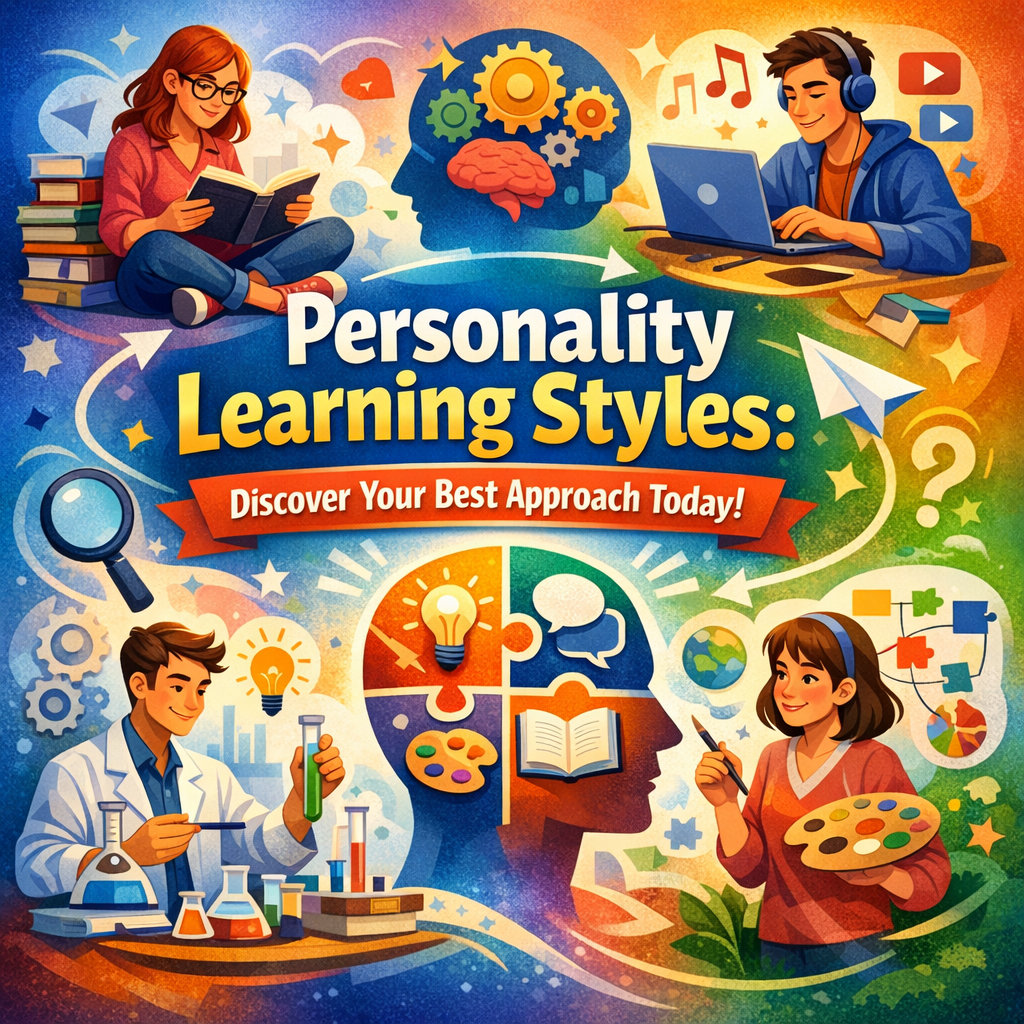
Personality Learning Styles: Discover Your Best Approach Today!
- Personality Learning Styles: Unlocking Your Unique Approach to Learning
- What Are Personality Learning Styles?
- How Personality Influences Learning
- Identifying Your Personality Learning Style
- Adapting Your Learning Strategies
- Tips for Visual Learners
- Tips for Auditory Learners
- Tips for Kinesthetic Learners
- Tips for Read/Write Learners
- The Importance of Flexibility
- Conclusion
Personality Learning Styles: Unlocking Your Unique Approach to Learning
Personality learning styles play a crucial role in how individuals absorb, process, and retain information. Understanding your unique learning style can significantly enhance your educational experience, improve retention, and make the process more enjoyable. In a world filled with diverse teaching methods and subject matters, recognizing how your personality intersects with your learning habits can lead to a more tailored and effective learning strategy.
What Are Personality Learning Styles?
Personality learning styles are classifications that highlight the ways in which individuals prefer to gather, process, and utilize information based on their personality traits. These styles can help educators design more effective lesson plans and allow learners to incorporate practices that resonate with their strengths.
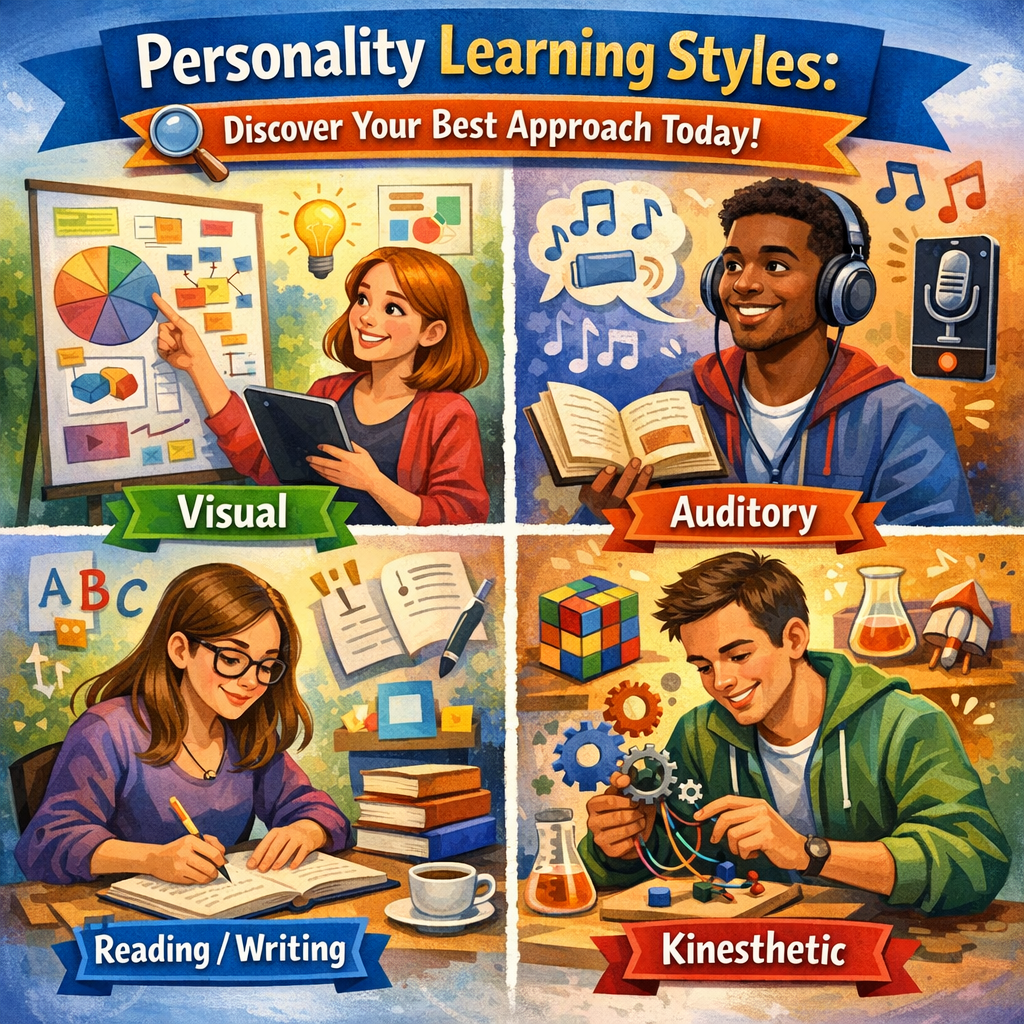
The most widely recognized model for categorizing personality learning styles includes a few distinct types:
– Visual Learners: This group tends to learn best through visual aids such as diagrams, charts, and videos.
– Auditory Learners: These individuals often excel when they listen to lectures, discussions, or audio materials.
– Kinesthetic Learners: These learners grasp concepts through hands-on experiences and physical activity.
– Read/Write Learners: They find comprehension and retention high when information is presented in writing—such as textbooks, articles, and reports.
How Personality Influences Learning
Your personality is more than just a set of traits; it shapes your learning style. For instance, someone who is highly social may thrive in collaborative settings, while an introspective individual might prefer solitary study. Understanding how these traits correlate with learning strategies can provide insights into optimizing your study habits.
Identifying Your Personality Learning Style
Identifying your personality learning style can be achieved through self-reflection and various assessment tools. Here are some steps to guide you:
1. Self-Assessment: Reflect on how you prefer to learn in different settings. Do you find yourself doodling during lectures, or does absorbing information in a quiet library work best for you?
2. Take a Learning Style Quiz: Numerous online quizzes are tailored to identify your learning style based on your personality traits. Search for reputable sources to ensure validity.
3. Seek Feedback: Discuss your learning preferences with peers or educators—sometimes, others can provide insights into your skills that you might overlook.
Adapting Your Learning Strategies
Once you’ve determined your personality learning style, you can adapt your study strategies accordingly.
Tips for Visual Learners
For those who resonate with visual learning, employing tools such as mind maps or flashcards can enhance comprehension. Incorporating visuals into your notes—like highlighting important concepts and using color-coded systems—can also aid memory retention.
Tips for Auditory Learners
Auditory learners benefit from listening to lectures or discussions, so consider joining study groups where you can discuss topics aloud. Recording your notes and playing them back can turn study time into an auditory experience.
Tips for Kinesthetic Learners
Hands-on projects and practical applications can be highly beneficial for kinesthetic learners. Engage in active learning through experiments, simulations, or role-playing scenarios to grasp concepts effectively.
Tips for Read/Write Learners
Read/write learners thrive on written information. Focus on taking detailed notes during your readings and summarizing them in your own words. Blogging or journaling about what you’ve learned is also a great way to reinforce ideas.
The Importance of Flexibility
While identifying your personality learning style is undoubtedly useful, it’s vital to remain flexible. Not every topic may align perfectly with your preferred style. Developing a versatile skill set can enhance your adaptability and overall learning effectiveness.
Exploring various techniques from other styles can enrich your approach, allowing you to tackle more complex subjects with confidence. For instance, a visual learner might benefit from listening to audiobooks or participating in discussions, despite their primary preference for visual aids.
Conclusion
In a world of diverse learning environments, personalizing your approach through understanding your personality learning styles can be transformational. By identifying your preferred style and adapting your study strategies accordingly, you can unlock a more enjoyable and effective educational experience. Remember, the journey of learning is not one-size-fits-all; it’s uniquely yours—embrace it!