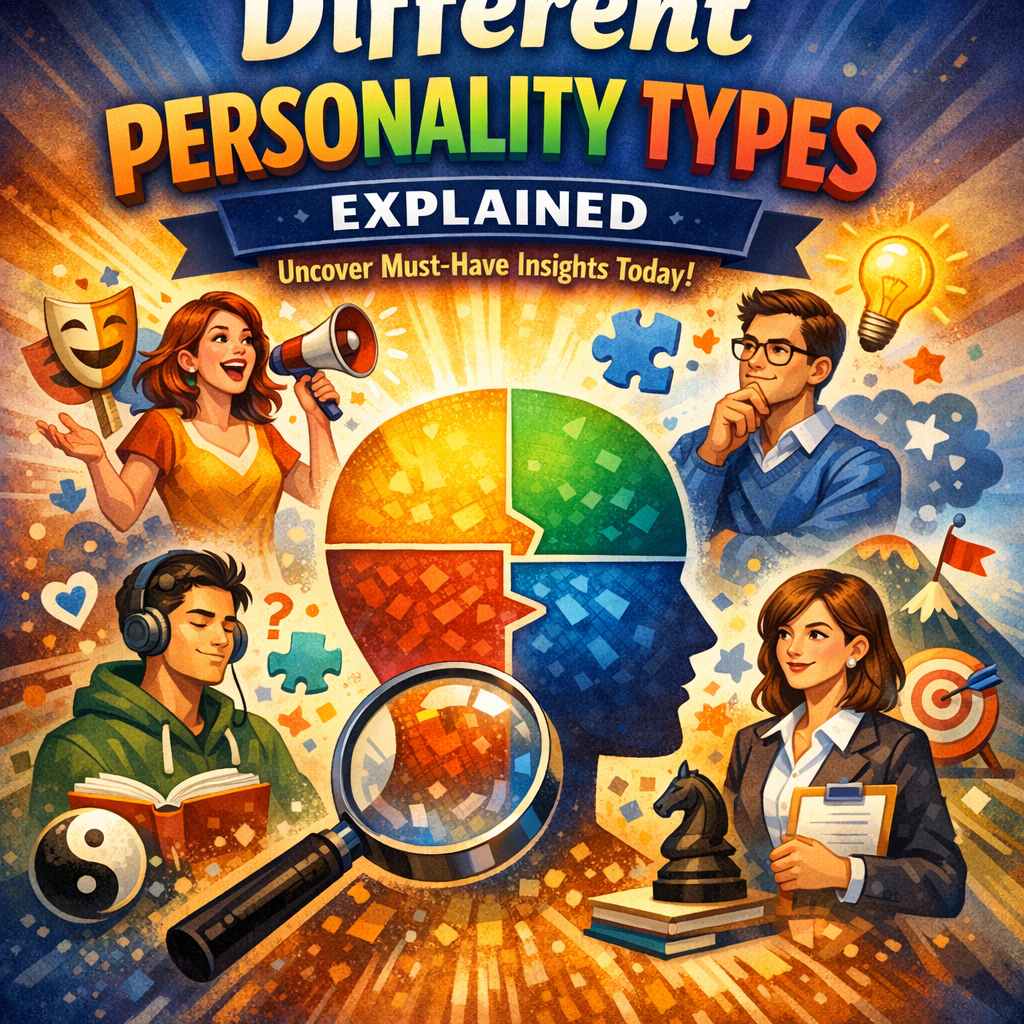
Different Personality Types Explained: Uncover Must-Have Insights Today!
- Different Personality Types Explained: Understanding the Spectrum of Human Behavior
- The Foundations of Personality Types
- Exploring Common Personality Types
- Extraverts vs. Introverts
- Thinkers vs. Feelers
- The Role of Personality Types in Personal Growth
- Embracing Diversity in Personality
- Conclusion
Different Personality Types Explained: Understanding the Spectrum of Human Behavior
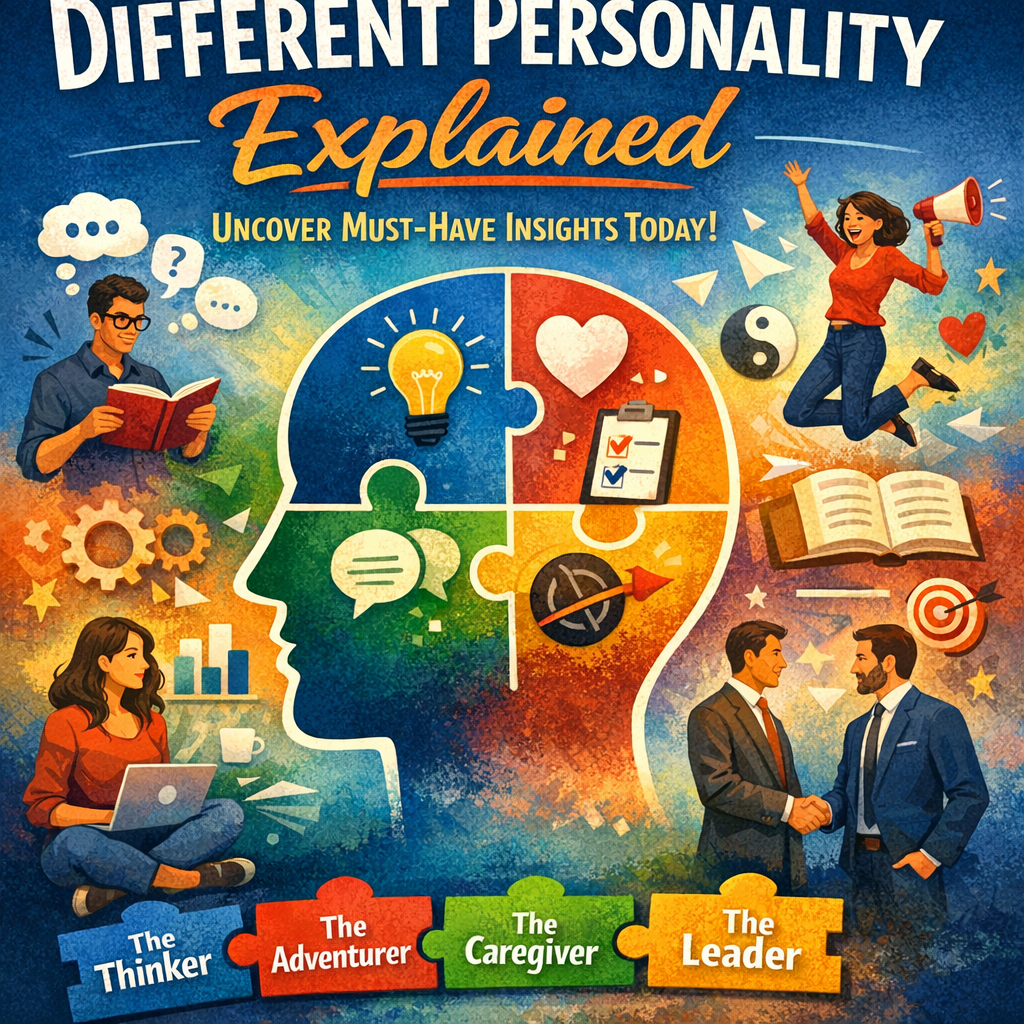
Different personality types explained can significantly enhance your understanding of yourself and others. Each individual possesses a unique blend of traits, behaviors, and responses to varying situations. This diversity influences our interactions, decision-making abilities, and overall perspective on life. By exploring these personality types, we can foster deeper connections and improve communication in both personal and professional relationships.
The Foundations of Personality Types
To comprehend the various personality types, it’s essential to start with the fundamental theories in psychology. Prominent models include the Myers-Briggs Type Indicator (MBTI), the Big Five personality traits, and the Enneagram. Each framework offers a different lens through which to view and categorize personality traits.
– Myers-Briggs Type Indicator (MBTI) categorizes individuals into 16 distinct types based on four dichotomies: Introversion vs. Extraversion, Sensing vs. Intuition, Thinking vs. Feeling, and Judging vs. Perceiving. This model emphasizes how people process information and interact with the world around them.
– The Big Five (OCEAN) framework, consisting of Openness, Conscientiousness, Extraversion, Agreeableness, and Neuroticism, is widely recognized for its scientific validity. This model allows for a spectrum of traits, examining where someone might fall on each of these dimensions.
– The Enneagram divides personality into nine types, each reflecting a core motivation and emotional reaction. This model emphasizes personal growth and understanding by focusing on the underlying motivations of behavior.
Exploring Common Personality Types
Extraverts vs. Introverts
One of the most fundamental distinctions among different personality types is between extraverts and introverts. Extraverts tend to be outgoing, social, and energized by interaction with others. They thrive in group settings and often take the lead in social situations. In contrast, introverts find their energy in solitude or quiet environments and may prefer smaller gatherings or one-on-one interactions.
Understanding whether you lean more toward extraversion or introversion can help improve your communication style and social strategies. For instance, an extravert might feel frustrated by an introvert’s need for alone time, while the introvert may find large gatherings overwhelming.
Thinkers vs. Feelers
Another vital aspect is how individuals process information. Thinkers prioritize logic and objectivity in decision-making, often valuing facts over emotions. Conversely, feelers consider personal values and the emotional impact of choices, prioritizing harmony in relationships.
Recognizing these differences can lead to more productive conversations and partnerships. For instance, when collaborating on a project, a thinker might focus on data analysis, while a feeler might advocate for team morale. Balancing these approaches can lead to more holistic decision-making.
The Role of Personality Types in Personal Growth
Different personality types explained offers unique insights that can enhance personal development. Understanding one’s traits can clarify strengths and weaknesses, paving the way for self-improvement.
1. Self-Awareness: Identifying your personality type can spark self-reflection. You can recognize patterns in behavior, motivations, and emotional responses, enabling you to make more informed choices.
2. Adaptability: Once you understand the spectrum of personality types, adapting your communication style to suit the preferences of others becomes easier. This flexibility can enhance professional relationships and strengthen personal bonds.
3. Conflict Resolution: Knowing different personality types can facilitate better conflict resolution. By understanding the root of disagreements—whether they stem from differing logical approaches or value-driven opinions—you can address issues more effectively.
4. Career Success: Various personality types align with different career paths. For example, creative thinkers may excel in artistic roles, while detail-oriented individuals might thrive in analytical positions. By understanding your type, you can seek roles that resonate with your strengths.
Embracing Diversity in Personality
Understanding the spectrum of personality types fosters acceptance and appreciation of differences. Each personality type contributes uniquely to society, and recognizing this diversity enhances interpersonal relationships.
Creating an inclusive environment—whether at home, in the workplace, or in social settings—means considering the varying preferences and strengths of different personality types. Embracing diversity leads to enriched interactions and innovative thinking.
Conclusion
In closing, a deep dive into different personality types explained not only enhances self-awareness but also offers the opportunity to cultivate harmonious relationships. By leveraging these insights, individuals can navigate the complexities of human behavior more effectively, contributing to personal growth and mutual understanding. Embrace the diversity of personality and watch how it transforms your interactions and experiences in life. Understanding others is one of the most profound gifts we can give ourselves—and it all starts with recognizing the different facets of personality.