

Different Personality Types Explained: Discover the Best Insights Today!
- Personality Frameworks: An Overview
- Myers-Briggs Type Indicator (MBTI)
- Big Five Personality Traits
- The Importance of Knowing Different Personality Types
- Enhanced Communication
- Improved Team Dynamics
- Personal Development
- Common Personality Types and Their Traits
- The Commander (ENTJ)
- The Mediator (INFP)
- The Architect (INTJ)
- The Entertainer (ESFP)
- Conclusion
Different Personality Types Explained: Discover the Best Insights Today!
Different personality types explained can illuminate not only our own behaviors but also how we interact with others. Understanding personality types is vital for fostering better relationships, enhancing teamwork, and unlocking individual potential. This exploration gives us the tools to navigate the complexities of human behavior and communication.
Personality Frameworks: An Overview
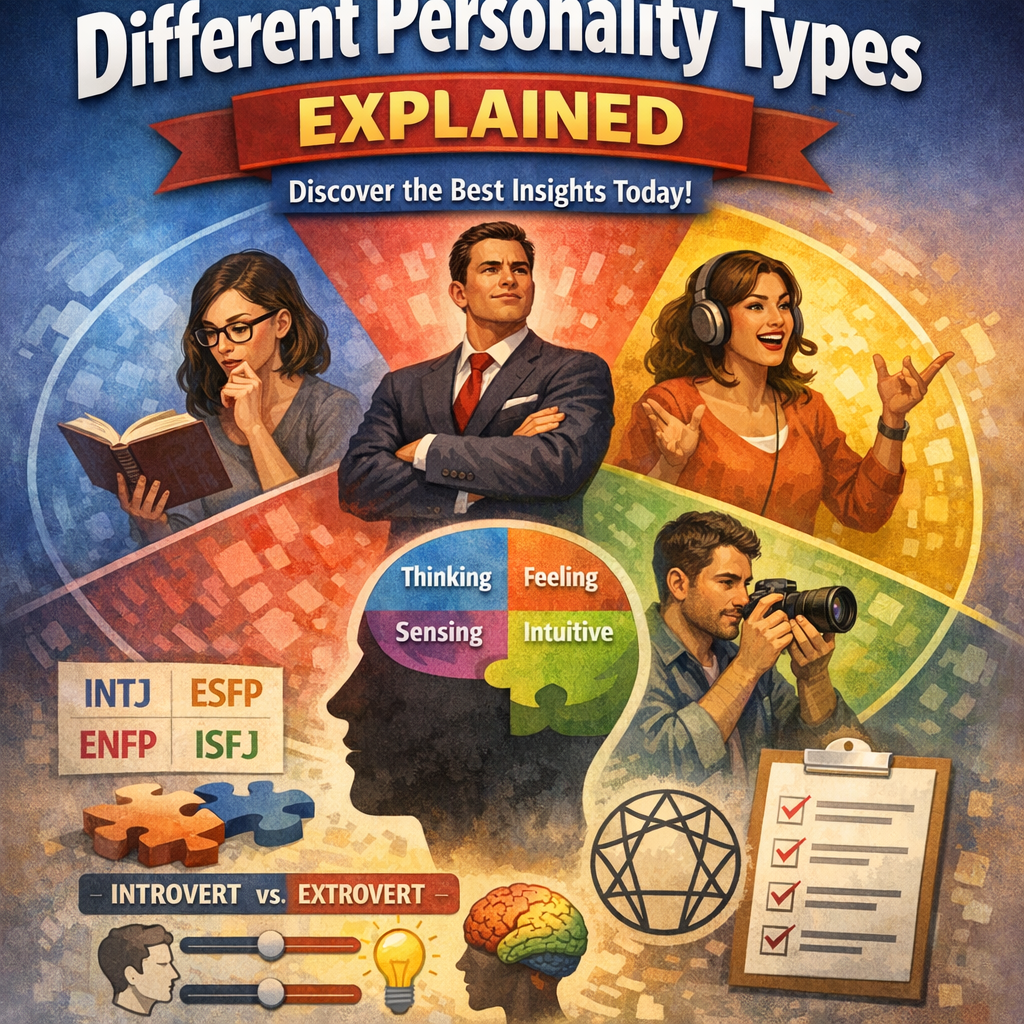
To delve into the different personality types, various frameworks have been developed by psychologists and researchers. Two of the most widely recognized models are the Myers-Briggs Type Indicator (MBTI) and the Big Five Personality Traits.
Myers-Briggs Type Indicator (MBTI)
The MBTI categorizes individuals into 16 distinct types based on four dichotomies:
1. Introversion (I) vs. Extraversion (E)
– Introverts tend to feel recharged by solitary activities, while extraverts thrive in social situations.
2. Sensing (S) vs. Intuition (N)
– Sensors focus on concrete information, while intuitives look at the bigger picture and future possibilities.
3. Thinking (T) vs. Feeling (F)
– Thinkers make decisions based on logic and objectivity, while feelers prioritize emotions and personal values.
4. Judging (J) vs. Perceiving (P)
– Judgers prefer structure and decisiveness, whereas perceivers are more adaptable and open-ended.
This classification provides a comprehensive understanding of different personality types, revealing how each interacts with the world.
Big Five Personality Traits
The Big Five model outlines personality along five dimensions:
1. Openness
– This trait indicates how open a person is to new experiences and ideas.
2. Conscientiousness
– Conscientious individuals are organized, dependable, and disciplined.
3. Extraversion
– Similar to the MBTI, this trait describes one’s sociability and assertiveness.
4. Agreeableness
– Those high in agreeableness are compassionate and cooperative.
5. Neuroticism
– Neurotic individuals may experience emotional instability and anxiety.
Understanding these dimensions can help clarify the diverse behavior patterns exhibited by different personality types.
The Importance of Knowing Different Personality Types
Recognizing different personality types explained goes beyond simple classification; it holds significant implications for personal and professional growth. Here are several reasons why understanding personality types is critical.
Enhanced Communication
Effective communication is the bedrock of healthy relationships. When you understand someone’s personality type, you can tailor your communication style to be more effective. For instance, if you’re collaborating with a person who is high in neuroticism, they might benefit from reassurance during stressful times. Conversely, someone who scores high in conscientiousness may appreciate a structured dialogue centered around facts.
Improved Team Dynamics
In workplaces, understanding personality diversity can contribute to better team dynamics. Knowing the different strengths each personality brings to the table allows teams to assign roles that align with individual skills. For example, a person with high openness may excel in brainstorming sessions, while a conscientious individual might be best suited for project management.
Personal Development
Self-awareness is a significant step toward personal growth. By identifying your personality type, you can focus on areas for improvement, whether that means working on social skills if you lean towards introversion or cultivating patience if you are inclined to neuroticism.
Common Personality Types and Their Traits
To further cement these concepts, let’s look at some common personality types based on the Myers-Briggs framework:
The Commander (ENTJ)
ENTJs are natural leaders, known for their decisiveness and strategic thinking. They thrive in challenging environments and excel at turning visions into reality.
The Mediator (INFP)
INFPs are idealists who value harmony and authenticity. They are often compassionate and introspective, focusing on their inner values.
The Architect (INTJ)
INTJs are analytical and methodical thinkers who enjoy solving complex problems. They often prefer working independently but can lead when necessary.
The Entertainer (ESFP)
Spontaneous and enthusiastic, ESFPs are often the life of the party. They value experiences and thrive in social settings.
Conclusion
Different personality types explained offer invaluable insights into human behavior. By familiarizing ourselves with these concepts, we can enhance our interactions, improve our work dynamics, and foster personal growth. Whether you’re looking to improve your relationships or thrive in your career, understanding personality types is an essential tool for navigating the social landscape. As you engage with this knowledge, remember that every individual is unique, and blending different personality types can lead to more enriched experiences and collaborations.