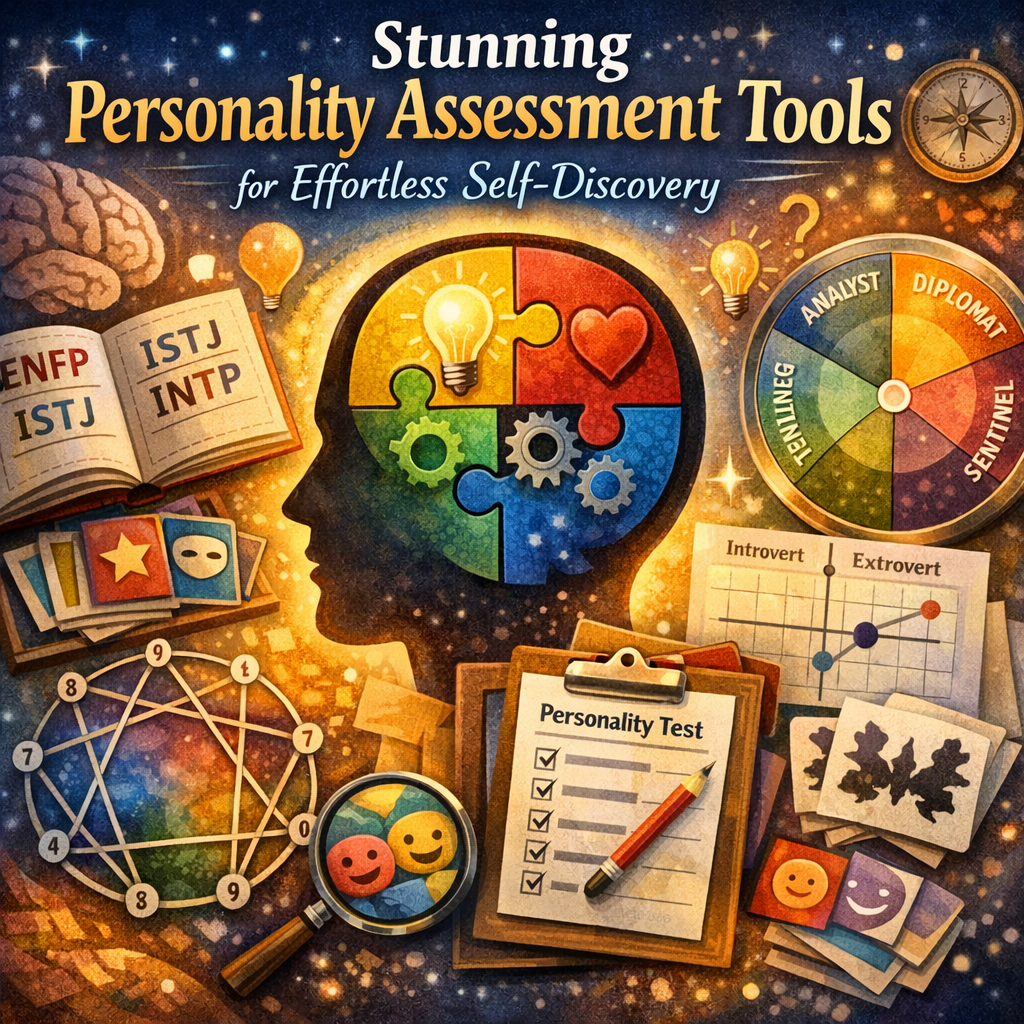
Stunning Personality Assessment Tools for Effortless Self-Discovery
- What Are Personality Assessment Tools?
- The Benefits of Using Personality Assessment Tools
- Popular Personality Assessment Tools
- 1. Myers-Briggs Type Indicator (MBTI)
- 2. The Big Five Personality Traits
- 3. Enneagram
- 4. DISC Profile
- How to Choose the Right Assessment Tool
- Conclusion
Stunning Personality Assessment Tools for Effortless Self-Discovery
Personality assessment tools are invaluable resources for anyone looking to understand themselves better. In today’s fast-paced world, where self-awareness can lead to personal growth and improved relationships, these tools provide insights into our behaviors, preferences, and motivations. Whether you’re seeking clarity on your career path, enhancing your interpersonal skills, or simply wanting to understand why you think and act the way you do, the right assessment can offer a doorway into self-discovery.
What Are Personality Assessment Tools?
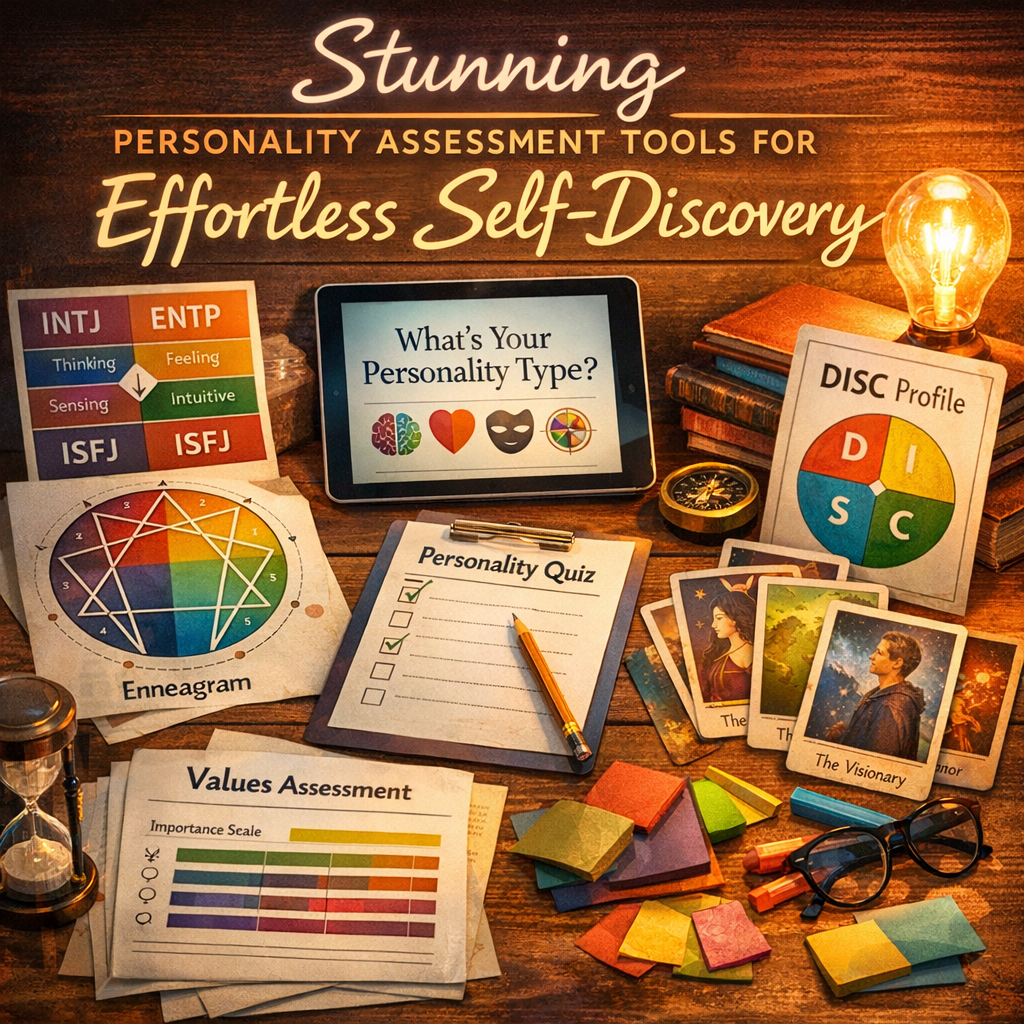
Personality assessment tools come in various forms, ranging from quizzes and questionnaires to in-depth evaluations. These tools analyze different aspects of our personalities, such as introversion versus extraversion, emotional intelligence, and even specific traits like creativity or conscientiousness. By answering a series of structured questions, individuals can receive feedback that highlights their strengths, weaknesses, and unique characteristics.
The Benefits of Using Personality Assessment Tools
Utilizing personality assessment tools can yield numerous benefits. Here’s a look at some key advantages:
1. Enhanced Self-Awareness: Understanding your personality type can shed light on your natural inclinations. This self-awareness allows you to recognize behaviors that may be holding you back and encourages personal growth.
2. Improved Relationships: By recognizing your communication style and emotional responses, you can cultivate healthier relationships. Understanding how you and others operate can lead to greater empathy and collaboration.
3. Career Guidance: Many personality assessments are designed with career paths in mind. They can help you identify jobs or fields where you’ll thrive, based on your innate strengths and interests, ultimately leading to greater job satisfaction.
4. Goal Setting: With insights into your personality traits, you can set realistic and attainable personal or professional goals. Knowing your preferences enables you to create a roadmap that aligns with who you are.
Popular Personality Assessment Tools
There are many personality assessment tools available, each offering its unique methodology. Here are a few of the most popular:
1. Myers-Briggs Type Indicator (MBTI)
The MBTI is perhaps one of the most well-known personality assessments. Based on Carl Jung’s theories, it categorizes individuals into 16 distinct personality types based on four dichotomies: introversion vs. extraversion, sensing vs. intuition, thinking vs. feeling, and judging vs. perceiving. This tool not only helps you understand your personality type but also offers insights on how you interact with the world and others.
2. The Big Five Personality Traits
Also known as the Five Factor Model, this assessment explores five key personality traits: openness to experience, conscientiousness, extraversion, agreeableness, and neuroticism. This model provides a comprehensive framework for understanding personality in a more nuanced manner, helping individuals see where they fall within these dimensions.
3. Enneagram
The Enneagram categorizes individuals into nine personality types, each with its own motivations, fears, and coping strategies. This tool not only aids in self-discovery but also enhances interpersonal dynamics by revealing how different types interact with each other.
4. DISC Profile
The DISC profile assesses behavior in terms of four different traits: Dominance, Influence, Steadiness, and Conscientiousness. This tool is particularly valuable in professional settings, helping teams understand their dynamics and improve collaboration.
How to Choose the Right Assessment Tool
With so many options available, it can be overwhelming to select the right personality assessment tool. Here are a few tips to simplify the process:
1. Identify Your Goals: What do you hope to achieve from the assessment? If you’re looking for career guidance, a tool like the MBTI may be more beneficial, while the Big Five could be more insightful for personal growth.
2. Research the Methodologies: Understand how each tool operates. Some assessments are more scientific and research-based, while others may be more experiential.
3. Seek Professional Guidance: If possible, consider working with a mental health professional or a coach who can guide you in interpreting your results and applying them to your life.
Conclusion
Engaging with personality assessment tools can be a transformative experience, offering remarkable insights into who you are and how you relate to the world. From enhancing self-awareness to guiding your career choices, these tools serve as a critical compass for navigating life’s complexities. By investing time in self-discovery through these assessments, you open yourself up to a deeper understanding of your unique personality and, ultimately, a more fulfilled life.