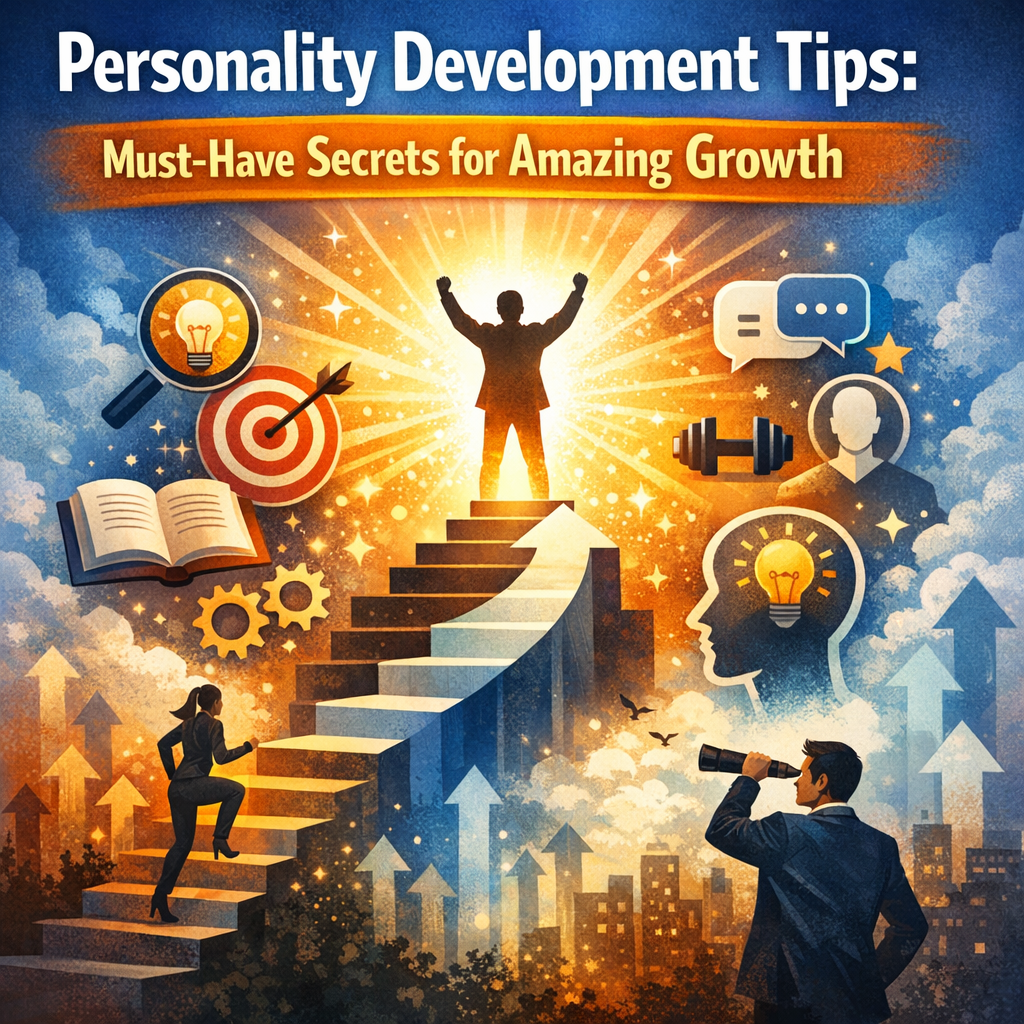
Personality Development Tips: Must-Have Secrets for Amazing Growth
- Understanding Personality Development
- Importance of Self-Awareness
- Setting Goals for Personal Growth
- SMART Goals
- Embracing Continuous Learning
- Reading and Online Courses
- Improving Communication Skills
- Active Listening
- Public Speaking
- Cultivating Emotional Intelligence
- Self-Regulation Techniques
- Building a Support Network
- Networking and Mentorship
- Conclusion
Personality Development Tips: Must-Have Secrets for Amazing Growth
Personality development tips can significantly enhance your self-awareness, boost your confidence, and improve your interpersonal skills. In a world that values personal branding and effective communication, taking steps toward developing a well-rounded personality is essential. Whether you’re aiming for personal success or professional growth, here are some must-have secrets that can help you achieve amazing transformations.
Understanding Personality Development

Before diving into specific tips, it’s crucial to understand what personality development means. It encompasses enhancing your traits, behaviors, and social skills to create a more appealing and effective version of yourself. This process involves self-reflection, understanding your strengths and weaknesses, and actively working to improve oneself. The journey may appear daunting but is incredibly rewarding.
Importance of Self-Awareness
One of the foundational elements of personality development is self-awareness. Understanding who you are, what you value, and how you respond to situations can greatly influence your growth.
– Journaling: Keeping a journal helps you reflect on your thoughts and feelings, allowing you to better understand yourself. Write about your daily experiences, analyzing how your actions reflect your desires and values.
– Feedback: Seek feedback from trusted friends or colleagues. Their perspectives can help you identify blind spots and areas for improvement that you might not see on your own.
Setting Goals for Personal Growth
Setting actionable goals is crucial in your journey of personality development. Without clear targets, your efforts may lack direction.
SMART Goals
The SMART framework (Specific, Measurable, Achievable, Relevant, Time-bound) is an excellent way to establish your personal growth objectives. For example, instead of saying, “I want to be more social,” a SMART goal would be, “I will attend one networking event each month for the next six months.” This allows for focused effort and measurable progress.
Embracing Continuous Learning
Learning is a lifelong process and plays a significant role in personality development. The world is constantly evolving, and staying updated will not only expand your knowledge base but also improve your adaptability.
Reading and Online Courses
Engage with a variety of literature or sign up for online courses focused on subjects of interest. This will broaden your perspective and enhance your conversational skills, making you a more engaging individual.
– Podcasts and Audiobooks: If you’re pressed for time, consider listening to podcasts or audiobooks. They provide valuable insights while fitting easily into a busy schedule.
Improving Communication Skills
Another key area of focus in personality development is effective communication. Whether it’s verbal or non-verbal, the way you express yourself can greatly impact how others perceive you.
Active Listening
Practice active listening by fully concentrating on what the other person is saying. This not only shows that you value their opinions but also strengthens your relationships.
– Body Language: Pay attention to your body language. Open and inviting posture, along with maintaining eye contact, can significantly enhance how you communicate.
Public Speaking
Joining organizations such as Toastmasters can equip you with speaking skills and confidence. Public speaking is not just for the stage; it’s a valuable skill for any situation where you need to articulate your thoughts clearly.
Cultivating Emotional Intelligence
Emotional intelligence (EQ) is the ability to identify, understand, and manage your own emotions, as well as those of others. High emotional intelligence is often associated with better leadership, relationships, and overall success.
Self-Regulation Techniques
Develop strategies for self-regulation, such as mindfulness and stress management practices. These techniques help you respond rather than react, enabling more thoughtful interactions with others.
– Empathy Practice: Engage in empathy exercises that allow you to put yourself in someone else’s shoes. This can improve your emotional awareness and deepen your connections with others.
Building a Support Network
Surrounding yourself with a strong support network is one of the most effective personality development tips. Your social environment plays a crucial role in influencing your attitudes and behaviors.
Networking and Mentorship
Seek mentorship from those who inspire you. A mentor can provide guidance while sharing their experiences and insights, facilitating your personal and professional growth.
– Community Engagement: Getting involved in community activities allows you to interact with diverse groups, broadening your social skills and experience.
Conclusion
Embracing personality development tips is not just about self-improvement; it’s about nurturing the best version of yourself. From building self-awareness and setting goals to enhancing communication and emotional intelligence, each step is vital on your journey. Remember, growth is a continuous process, and every effort you make will bring you closer to becoming the person you aspire to be. So start today, and unlock the amazing potential within you!