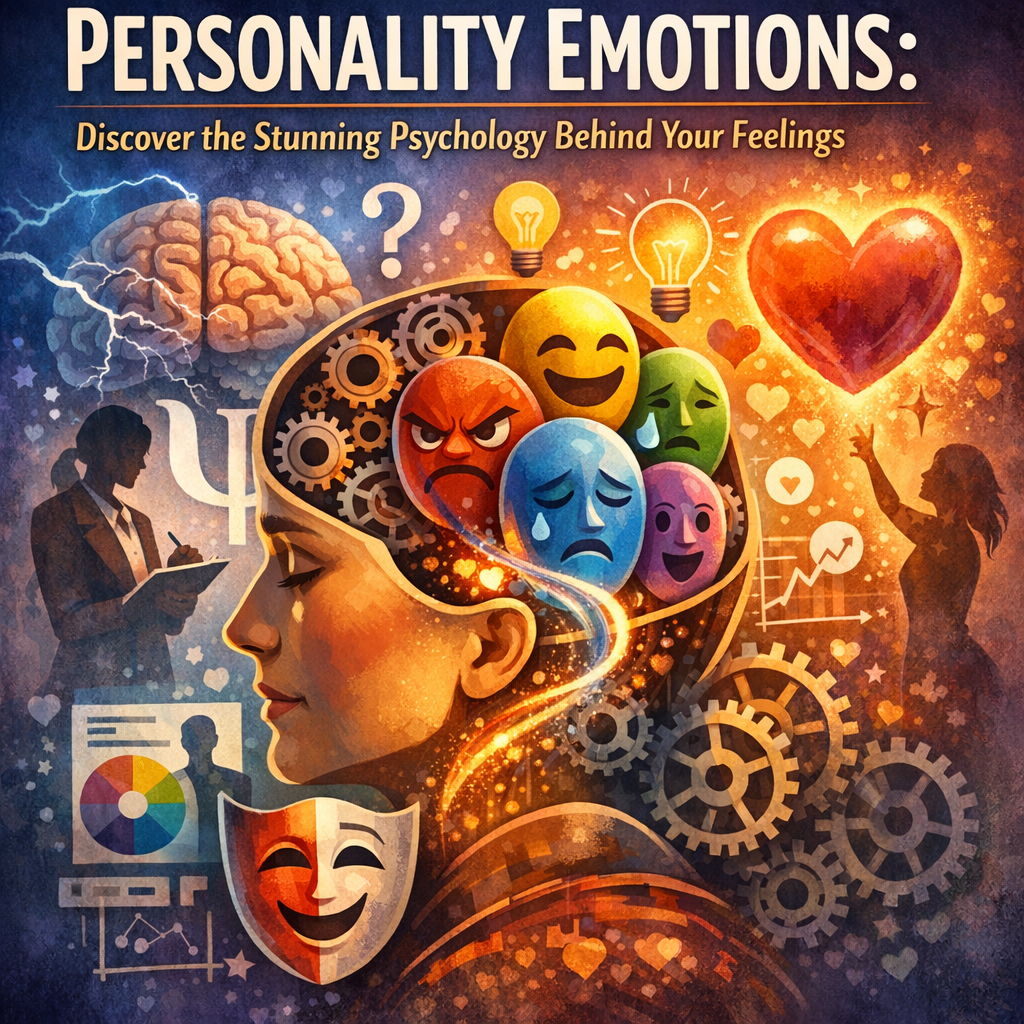
Personality Emotions: Discover the Stunning Psychology Behind Your Feelings
- Personality Emotions: The Stunning Psychology Behind Your Feelings
- The Foundations of Personality and Emotion
- The Interplay of Personality and Emotions
- Extraversion and Emotional Expression
- Neuroticism and Emotional Regulation
- The Role of Emotional Intelligence in Personality
- The Impact of Personality on Emotional Well-being
- Conclusion
Personality Emotions: The Stunning Psychology Behind Your Feelings

Personality emotions are complex phenomena that reflect not only our immediate reactions to situations but also our deeper psychological makeup. Understanding the interplay between our personalities and emotions can provide profound insights into how we navigate our daily lives, relationships, and even our mental health. This article explores the fascinating connection between personality traits and emotional responses, shedding light on the psychology that underlies our feelings.
The Foundations of Personality and Emotion
To grasp the concept of personality emotions, we first need to understand what personality is. Personality refers to the enduring patterns of thoughts, feelings, and behaviors that distinguish one individual from another. Psychologists often categorize personality traits using models such as the Big Five Personality Traits—openness, conscientiousness, extraversion, agreeableness, and neuroticism.
Emotions, on the other hand, are immediate, instinctive responses to stimuli. While emotions are universal, the way we experience and express them can vary widely based on our personalities. For instance, someone with a high level of neuroticism may find themselves overwhelmed by anxiety and sadness, while someone high in extraversion may exhibit joy and enthusiasm in similar situations.
The Interplay of Personality and Emotions
The interaction between personality and emotions can create a unique landscape for each individual. Let’s explore how different personality traits influence emotional expression and regulation:
Extraversion and Emotional Expression
Individuals who score high on extraversion are often seen as outgoing, sociable, and energetic. Their personality directly influences their emotional responses; they are more likely to express positive emotions openly. This tendency can enhance their social interactions, creating a positive feedback loop—expressing joy may lead to increased engagement and support from others, further amplifying their happiness.
On the flip side, extraverts may struggle with negative emotions, often feeling pressured to maintain a cheerful facade. When confronted with sadness or frustration, they may find it challenging to process these feelings without external validation.
Neuroticism and Emotional Regulation
Conversely, individuals high in neuroticism tend to experience a range of negative emotions more intensely than others. They might find themselves more susceptible to anxiety, anger, and mood swings. This heightened emotional reactivity is indicative of underlying psychological concerns that may need addressing.
The good news is that awareness of this connection can empower neurotic individuals to develop strategies for better emotional regulation. Seeking therapy, practicing mindfulness, or engaging in physical activities can help in managing overwhelming feelings and improving overall well-being.
The Role of Emotional Intelligence in Personality
Emotional intelligence (EI) plays a critical role in how individuals navigate personality emotions. EI refers to the ability to recognize, understand, and manage our own emotions while also being sensitive to the emotions of others. A person with high emotional intelligence can better regulate their responses, leading to healthier relationships and emotional resilience.
For example, individuals with a strong sense of emotional intelligence may be able to manage stress effectively, reducing the negative impacts of personality traits like neuroticism. They can articulate their feelings clearly, fostering better communication and understanding in both personal and professional settings.
The Impact of Personality on Emotional Well-being
The implications of personality emotions extend to mental health as well. Personality types can predispose individuals to certain psychological conditions. Understanding one’s personality traits can be the first step toward recognizing emotional triggers and behaviors that may require attention.
For instance, an individual who demonstrates high levels of agreeableness may be prone to putting others’ needs above their own, potentially leading to feelings of resentment and burnout. By identifying these tendencies, individuals can take proactive steps to establish healthier boundaries and improve their emotional well-being.
Conclusion
In summary, personality emotions stem from the rich interplay between our inherent traits and emotional responses. By exploring the connections between our personalities and the feelings we experience, we can gain deeper insights into ourselves. Not only does this understanding promote self-awareness, but it also equips us with the tools to navigate our emotional landscapes more effectively. Embracing the psychology behind our emotions can lead to a more fulfilling and emotionally balanced life, enhancing our overall mental health and well-being.
As we continue to discover the stunning psychology behind our feelings, let’s take a moment to appreciate the complexity and beauty of our emotional experiences, both individually and collectively.